1
Followers
23
Following

Expatable Family
Professed bibliophile with 12 active cards spanning four continents.
Currently reading
The Well-Trained Mind: A Guide to Classical Education at Home
Think and Grow Rich: The Landmark Bestseller--Now Revised and Updated for the 21st Century


 The Selfish Gene is Richard Dawkins argument for the evolutionary advantage of genes to contain selfish motives which ultimately ensure continuation of the species. He makes several valid and informative points using primarily aviary examples, however I found his argument lacking in the face of present day research and cloning. It didn't create a paradigm shift in thought as other readers professed since I am not in the field of genetic.
 I thoroughly enjoy reading about the human side of super athletes and how they cope with the obsessive compulsiveness nature of training 8 hrs a day for decades on end. The truth is many of them hate it, but have the mental willpower to overcome their inner dragon of hatred. I admire this willpower to no end, and enjoyed the book.
 I found Friendman's writing style too sensationalist to take as seriously as The World is Flat. I still learned a fair amount, and can climb on board with Friedman's environmental idealism, but did not appreciate the right-wing slandering and political bias.
Science and Religion
 I enjoyed Prof. Principe's lecture on the history of science and religion from St. Augusta up to present day. His 30min lectures on Fundamentalism and Darwin: Responses to Evolution (lecture 10 & 11) are concluded by renouncing 'extremists' on both sides. I enjoyed listening to his passion for Newton, Boyle, St. Augusta, and Georges Lemaître. Highly educational and enjoyable topic!
 Having spent time working in the IT industry, and reading previous works by Isaacson, I finished the audio version of Steve Jobs in 48 hours. Isaacson concludes Job's authoritative leadership style was unnecessary to create the transformations he did at Apple. Jobs argues, "Maybe it was unnecessary, but it is the only way I know." Jobs was nothing short of Lee Kuan Yew turning around Singapore, but the resounding conclusion is you do not have to be an Asshole to get things done. My personal thought is that it useful under duress, but is just one blueprint or "door to the same house." I walked away from the book with insight, and more respect for Apple products and Isaacson, but not as much for Jobs.
 This is a great reference book for an English Literature 101 style self-paced learning method. It is intended to train your brain to get the most out of reading challenging texts from 500BC through modern day. It would be best used in conjunction with Susan's other book, The Well Trained mind as a high school curriculum course. There is enough material to easily span 4yrs of reading. Her recommended reading lists (all 300 pages) of classic Poetry, Drama, Autobiography, and History are fairly dry and despondent, but much of history was spent in anguish compared to modern day. The classical methodology of home school is taught in a way that incorporates all subjects. There is no division between history, science, or math, and this book should be approached accordingly. I personally enjoyed her recommendation, and will be creating a few lists for personal use and notes on Goodreads.
 The audio book recording of TAOH is very calming. I found myself re-listening to the sections on marriage and empathy while browsing produce isles and riding the bus. This book is a great introduction to the Buddhist doctrine, and good for mental health. Follow up with additional text from this list: http://www.goodreads.com/list/show/26.A_Buddhist_Reading_List#281184.
 Simple beautiful read about how to stay positive, be true to yourself, and be thankful for every day. The Tuesday's with Morrie Jonathon Seagull style advice books are hardly groundbreaking, yet more challenging than training for a mega marathon. That's why they are great to re-read every few years, and pass along to family. If only it came as natural as bathing - rinse, lather, and repeat.
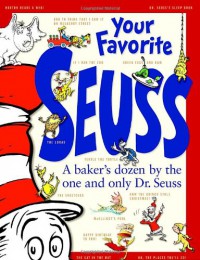 I wouldn't classify the 12 Seuss books in this collection as my personal absolute favorite, but the selection is pretty darn close. My children and I also enjoyed the fan mail and historical backdrop shared before each story. Great editing, worthy of Amazon gifting or for your personal shelf.
 Great audiobook to ponder while doing housework. Bryson's delves into the biology and geology of our planet, and how very fragile it is. Bryson makes a strong argument for the extinction of homosapians, not a matter of if but how and when. Yet you walk away feeling hopeful, almost relieved. If someone can spell it out so clearly, just maybe there is a chance that, as Dr. Malcom said, "Life will find a way."


 1
1
 CS Lewis addresses the British public in this short essay on his feelings about the removal of teaching values in the school system. The use of elegant rhetoric is superb, on par with what I would expect from such a reputable writer.
 Lewis argues in favour of a set of Universal values, one that a modern education system 'shies' from teaching. He believes certain responses to the nature of man are more appropriate and just than others, and tries to merit them through examples of multiple religious teachings. While I largely agree that trained emotional responses is a critical part of intelligence, the vehicle by which one must find this training is arguable.
Lewis outlines these values briefly in the final 20 pages, drawing from the Tao and ten commandments. Every time I read a list of 'universal' truths, they make me squirm the same way watching the Days of Wine & Roses makes me wonder what else we resign to in the name of tradition and 'values'. I enjoyed entertaining Lewis's notions for an evening, and hope to to learn more from him in future reads.
 Taleb would have done himself a favor by placing part III at the front of the book, then proceed to call everyone out. I am reminded of this scene in patch Adams: http://www.youtube.com/watch?v=jNN6FI1Gcr8
Just because you are an intellectual, doesn't mean you have to be a jerk to make a point.
 It was with great pleasure I took to reading about Einstein's human nature. It is full of witty aphorisms, theoretical physics debates with every scientist to leave a mark on history, and above all the struggle of a brilliant mind to fully succumb to any one train of thought. Einstein goes through an endless scientific pattern of accepting and rejecting everything in his life from religion, quantum physics, pacifism, politics, and monogamy, only to come full circle and accept again his original notions. By the end you wonder, in light of new evidence, what Einstein would ponder today. Most five star books I mark so because I have recommended or purchased them for someone I care about. I would be more likely to keep this one selfishly to myself. An addendum of Einstein's formulas would have proven useful for the visual learners.